
Pregnancy comes with many important check-ups, and the anomaly scan is one of the most detailed ones. Done around 18 to 20 weeks, this scan helps doctors examine your baby’s growth, organs, and overall development.
If your doctor has advised an anomaly scan in pregnancy, this guide explains what it checks, when it is done, what a normal report means, and what to expect during the scan.
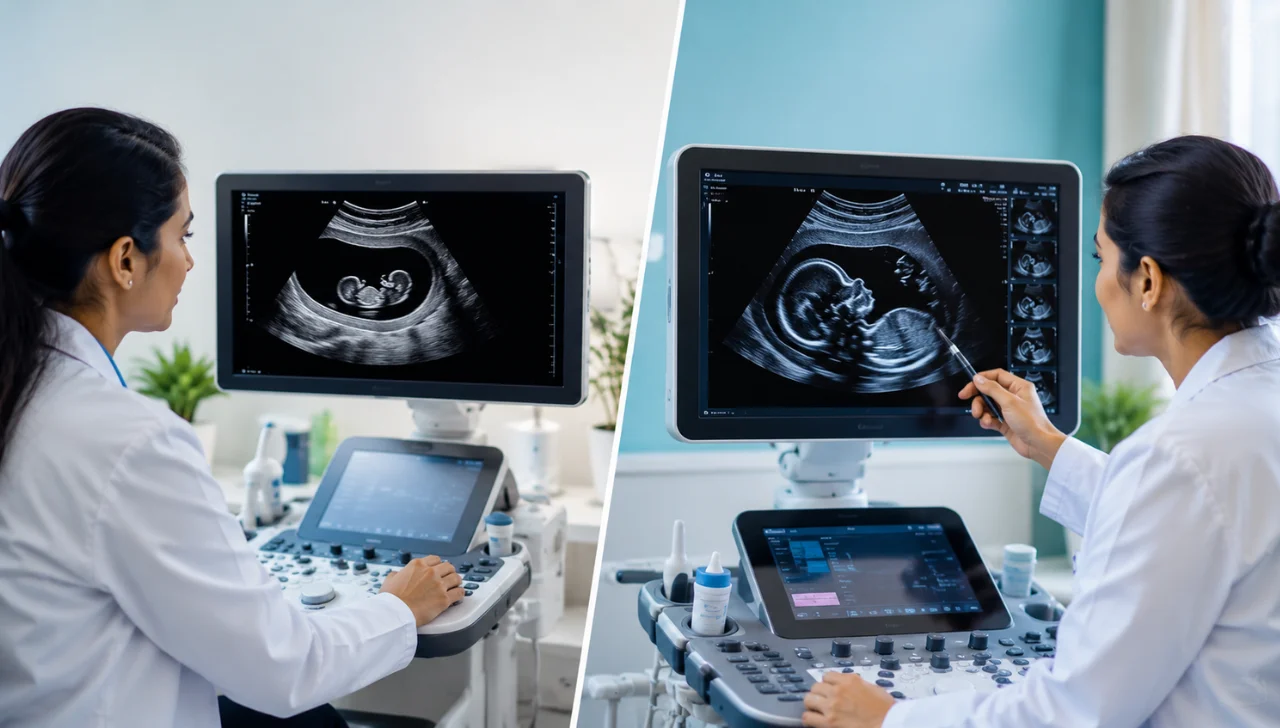
An anomaly scan, also called a fetal anomaly scan, USG anomaly scan, or 20-week ultrasound, is a detailed pregnancy ultrasound usually done during the second trimester. It helps doctors examine your baby’s organs, brain, spine, heart, limbs, placenta, and overall growth. The scan checks if your baby’s development is progressing normally and helps identify any structural abnormalities that may need further medical attention.
The anomaly scan is typically done between 18 and 22 weeks of pregnancy. Most doctors recommend it around 20 weeks, which is why it is commonly called the 20-week ultrasound.
At this stage, your baby is developed enough for the sonographer to clearly see all the major organs and structures. Going too early may result in incomplete images.
Regular pregnancy check-ups with an experienced gynaecologist help ensure important pregnancy scans are done at the right stage.
The fetal anomaly scan looks at many things in a single session. Here is what the sonographer typically examines:
Baby's Anatomy:
Other Checks:
This is the most thorough structural check your baby receives during pregnancy.
Many mothers get confused between the NT scan (nuchal translucency scan) and the anomaly scan. Here is a simple comparison:
|
NT Scan |
Anomaly Scan |
|
|
When |
11–14 weeks |
18–22 weeks |
|
Purpose |
Screens for chromosomal conditions like Down syndrome |
Checks baby's organs and structural development |
|
What it measures |
Fluid at the back of the baby's neck |
Full anatomy, brain, heart, spine, kidneys, limbs |
|
Type of scan |
Screening scan |
Detailed diagnostic scan |
The NT scan is an early screening tool. The anomaly scan is a detailed structural check done later in pregnancy. Both are important; they serve different purposes at different stages.
After the scan, you receive a written report. An anomaly scan normal report will typically state:
If the report uses phrases like "no obvious anomalies detected" or "fetal anatomy appears unremarkable", that is a good sign. "Unremarkable" in medical language means normal, with nothing unusual to report.
If the scan finds something that needs a closer look, your doctor will explain the findings and recommend next steps. Many follow-up findings turn out to be minor or resolve on their own. Try not to panic before speaking with your doctor.
Not every finding on an anomaly scan means something serious. Some findings are:
Your doctor will guide you based on the findings. In some cases, additional scans, blood tests, or specialist consultations may be recommended.
Hormonal and health conditions during pregnancy, like thyroid disorders, can sometimes affect fetal development. If you have thyroid concerns, it is worth reading about thyroid tests during pregnancy and their importance.
The anomaly scan cost may vary depending on the city, hospital, and type of ultrasound equipment used. In many cases, the cost ranges between ₹1,500 and ₹5,000.
Choosing an experienced radiologist and a quality ultrasound centre is more important than choosing the lowest price.

The USG anomaly scan is simple and painless. Here is what to expect:
The gel used during the scan is safe and causes no discomfort. The scan involves placing an ultrasound probe gently on your abdomen. It is completely safe for both you and your baby.
The anomaly scan is detailed, but it is not perfect. Some conditions may not be visible at 20 weeks, especially those that develop later in pregnancy. Others depend on the baby's position during the scan.
The scan is a screening tool. A normal report gives strong reassurance, but it does not completely rule out every possible condition. Your doctor will advise additional testing if there is a clinical reason for concern.
Is the anomaly scan safe for the baby?
Yes. The anomaly scan uses sound waves, not radiation. It is completely safe for both mother and baby and has been used routinely in pregnancy care for decades.
Can the anomaly scan tell the baby's gender?
The scan can often show the baby's sex, but gender determination and disclosure is regulated in India under the PNDT Act. Your doctor will follow legal guidelines on this.
What if my baby is not in the right position during the scan?
If the baby is in an awkward position, the sonographer may ask you to walk around or wait for the baby to move. In some cases, a repeat scan may be needed to complete all measurements.
Is the anomaly scan the same as the anatomy scan?
Yes. Anomaly scan, anatomy scan, fetal anomaly scan, and 20-week ultrasound all refer to the same detailed second-trimester scan.
The anomaly scan in pregnancy is one of the most detailed checks your baby receives before birth. Done around 18 to 22 weeks, it gives your doctor a clear picture of your baby's organs, growth, and overall development.
Understanding what the scan checks, what a normal report looks like, and what to expect on the day takes away a lot of the anxiety around it. Go in prepared, ask your doctor any questions you have, and trust the process.
If you are in Ranchi and need expert pregnancy care or have questions about your scan results, reach out to the specialists at Vardaan Hospitals.
Vardan Hospitals © 2025. All rights reserved.