
Most people think of physiotherapy as something only athletes or accident victims need. But the truth is, physiotherapy helps people of all ages recover from injuries, manage long-term pain, regain movement after surgery, and improve their overall physical health.
If you have been dealing with back pain, neck stiffness, joint problems, or recovering from a stroke or surgery, physiotherapy may be exactly what your body needs, and in many cases, it helps you avoid surgery altogether.
Physiotherapy is a safe and effective treatment that helps reduce pain, restore movement, improve strength, and support recovery from injuries, surgery, and long-term health conditions.
This guide explains what physiotherapy is, the benefits of physiotherapy for different conditions, the types available, and when you should see a physiotherapist.
Physiotherapy is a healthcare treatment that helps people restore movement, reduce pain, and improve physical function using exercises, manual therapy, and other techniques. It is provided by trained professionals called physiotherapists who assess your condition and create a personalised treatment plan for you.
Unlike medicines that manage symptoms, physiotherapy works on the root cause of the problem, if that is a weak muscle, a stiff joint, poor posture, or nerve damage. It treats the whole body, not just the area that hurts.
The World Health Organization recognises physiotherapy as an essential health service for rehabilitation and prevention of disability.
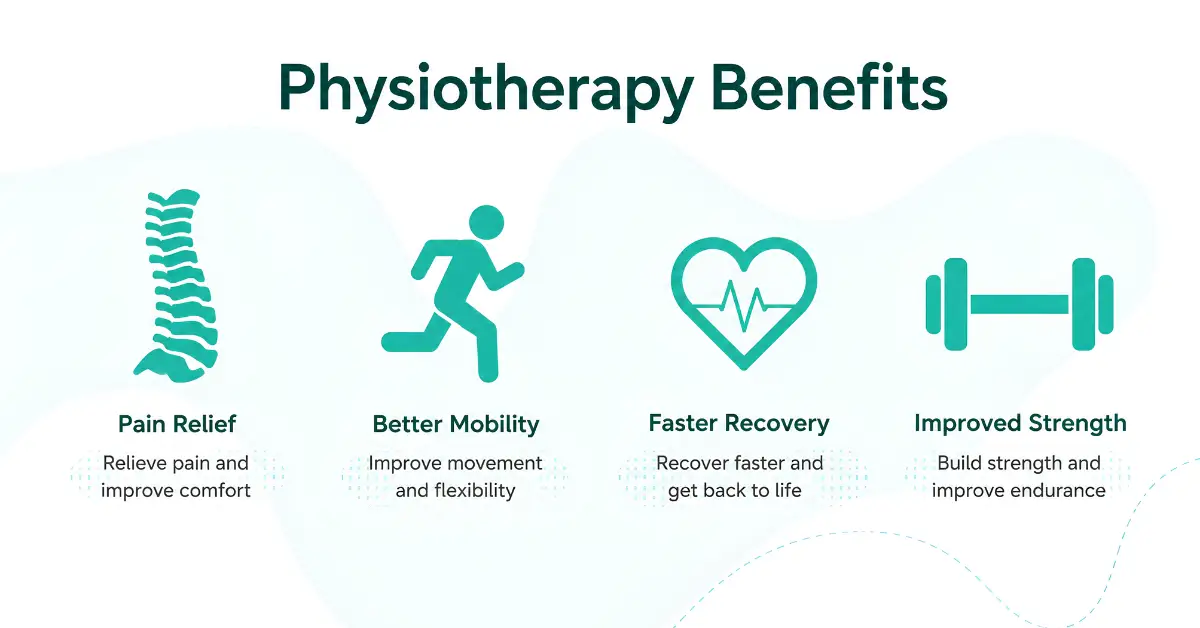
The benefits of physiotherapy go well beyond just pain relief. Here is what a proper physiotherapy programme can do for your body.
Physiotherapy helps reduce pain naturally by improving movement, strengthening muscles, and reducing inflammation. Techniques such as manual therapy, ultrasound therapy, TENS, and therapeutic exercises improve function without relying heavily on pain medicines. Many people experience better mobility and long-term pain relief through a personalised physiotherapy programme.
Physiotherapy after surgery is a critical part of the healing process. After orthopaedic procedures like knee replacement, hip replacement, or spinal surgery, your muscles weaken and joints stiffen from being inactive. A structured physiotherapy programme begins the recovery process early, prevents complications like blood clots and muscle wasting, and gets you moving safely and confidently much sooner. At Vardaan Hospital, many patients recovering from fractures, joint replacement, or sports injuries are referred by our Orthopaedics Department for physiotherapy as part of their rehabilitation.
If you find it difficult to bend, turn, walk, or lift without pain, physiotherapy can restore your range of motion. Physiotherapy exercises are designed to gradually stretch and strengthen the muscles around the affected joint, improving flexibility over time without causing further damage.
People with chronic conditions like arthritis, diabetes-related neuropathy, Parkinson's disease, or chronic back pain benefit greatly from regular physiotherapy. It does not cure these conditions, but it helps manage their impact on daily life, keeping you mobile, independent, and comfortable.
One of the less talked about but highly valuable benefits of physiotherapy is injury prevention. A physiotherapist identifies weaknesses in your posture, movement patterns, or muscle strength that make you prone to injuries. By correcting these issues through targeted exercises, physiotherapy reduces the risk of the same injury happening again.
Stroke rehabilitation physiotherapy is one of the most important uses of physiotherapy in hospital care. After a stroke, patients often lose the ability to move one side of their body, speak clearly, or perform basic daily tasks. Physiotherapy plays a central role in retraining the brain and muscles to regain as much function as possible. Early physiotherapy after stroke significantly improves long-term recovery outcomes.
Chest physiotherapy is used for patients with conditions like pneumonia, COPD, and cystic fibrosis. It uses techniques to loosen mucus in the lungs and improve breathing. This type of physiotherapy is especially important for ICU patients and children with recurring chest infections.

Understanding the different types of physiotherapy helps you know which one is right for your condition.
| Type of Physiotherapy | Best For | Common Conditions Treated |
|---|---|---|
| Musculoskeletal Physiotherapy | Muscles, bones and joints | Back pain, neck pain, sports injuries, post-surgical recovery |
| Neurological Physiotherapy | Brain and nervous system | Stroke, Parkinson's disease, spinal cord injury, multiple sclerosis |
| Cardiopulmonary Physiotherapy | Heart and lungs | Post heart surgery recovery, COPD, pneumonia, breathing difficulties |
| Paediatric Physiotherapy | Infants and children | Cerebral palsy, developmental delays, childhood injuries |
| Geriatric Physiotherapy | Older adults | Fall prevention, osteoporosis, balance problems, age-related mobility loss |
| Sports Physiotherapy | Athletes and active individuals | Ligament tears, muscle strains, dislocations, performance recovery |
| Chest Physiotherapy | Chest and lung patients | Mucus clearance, ICU patients, cystic fibrosis, chest infections |
The benefits of physiotherapy are seen across a wide range of conditions. Physiotherapy is commonly used for:
Many patients also benefit from physiotherapy exercises for upper back pain, especially when discomfort is caused by poor posture or prolonged desk work.
If you have been diagnosed with cervical spondylosis and are experiencing neck and shoulder pain, you can read our detailed guide on cervical pain treatment, which explains how physiotherapy and other treatments work together.
For patients recovering from surgery, our guide on post-surgery care tips covers what to expect in the days and weeks after your procedure.
Your first physiotherapy session focuses on understanding your condition and creating a personalised treatment plan. Here's what you can expect:
| Factor | Clinic Physiotherapy | Home Physiotherapy |
|---|---|---|
| Equipment available | Full, ultrasound machines, TENS units, hydrotherapy | Basic; resistance bands, exercise mats |
| Manual therapy | Yes, hands-on treatment by physiotherapist | Not available |
| Best suited for | Serious conditions, post-surgery, neurological recovery | Supplementary exercises between clinic sessions |
| For elderly patients | Recommended where mobility allows | Home visits from physiotherapist can be arranged |
| Effectiveness | Higher for complex and post-surgical conditions | Good for maintenance, home exercise routines |
| Cost per session | Higher, specialist equipment and therapist | Lower, guided home exercise programmes |
| Supervision | Direct real-time supervision every session | Self-supervised with periodic check-ins |
The number of physiotherapy sessions depends on your condition. Minor injuries may need 4–8 sessions, while post-surgical recovery or neurological rehabilitation usually requires longer treatment.
Physiotherapy should not cause severe pain. Mild discomfort during exercises or manual therapy is normal, and your physiotherapist adjusts treatment according to your pain tolerance.
In some cases, physiotherapy can reduce pain, improve movement, and help avoid surgery. Your physiotherapist and orthopaedic doctor will recommend the most appropriate treatment for your condition.
Physiotherapy helps treat back pain, neck pain, sports injuries, arthritis, stroke rehabilitation, post-surgical recovery, balance disorders, and many musculoskeletal and neurological conditions.
An orthopaedic doctor diagnoses bone and joint conditions and performs surgery when needed. A physiotherapist focuses on rehabilitation, pain relief, movement, and restoring physical function.
Physiotherapy can significantly reduce back pain by improving posture, strengthening muscles, and correcting movement patterns. Long-term relief depends on regular exercises and healthy lifestyle habits.
If you are experiencing chronic pain, recovering after surgery, or struggling with movement and flexibility, early physiotherapy can speed recovery and improve your quality of life. Book an appointment with our experienced physiotherapists today.
At Vardaan Hospital, our experienced physiotherapy team provides personalised assessment and treatment for a wide range of conditions. Our physiotherapist in Ranchi is equipped with modern tools and staffed by trained specialists who work with you at every step of your recovery.
Call us: 📞 796 929 4525 Email: ✉️ [email protected] Visit us: 📍 Block Road, Kathi Tand Chowk, Ratu, Ranchi
Book an appointment with our experienced physiotherapists at Vardaan Hospital, Ranchi, and start your recovery today.
Disclaimer: This article is for general informational purposes only and does not replace professional medical advice, diagnosis, or treatment. Please consult a qualified physiotherapist for personalised guidance on your condition.
Vardan Hospitals © 2025. All rights reserved.