A positive pregnancy test followed by bleeding or a negative test a few days later can be confusing and upsetting. For many women, this is the first sign of a chemical pregnancy. If you're wondering what it means, what causes it, and what happens next, this guide explains everything clearly.
A chemical pregnancy is a very early miscarriage that happens before 5 weeks of pregnancy. It occurs after fertilization and implantation, but the embryo stops developing before it can be seen on an ultrasound. The most common cause is chromosomal abnormalities, and most women can conceive again successfully.
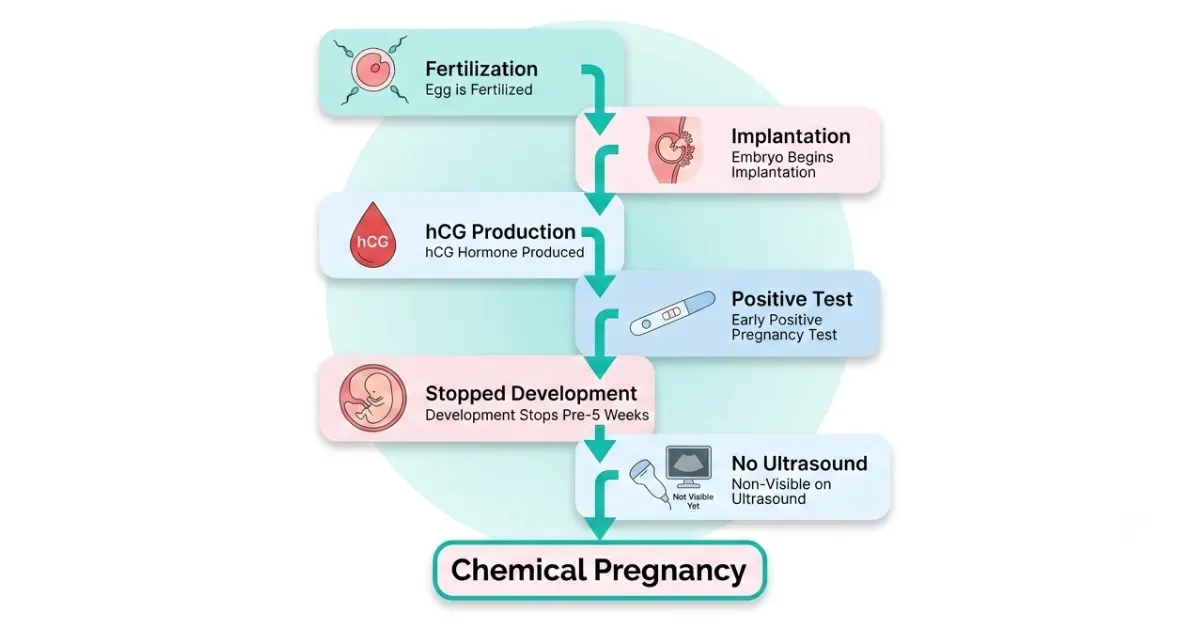
A chemical pregnancy is a very early pregnancy loss that happens before 5 weeks, shortly after a fertilized egg implants in the uterus.
The term "chemical" refers to pregnancy hormones hCG that rise just enough to trigger a positive test but drop quickly before the pregnancy can develop further.
In simple words: fertilization happened, implantation occurred, your body recognized the pregnancy and then it ended before an ultrasound could detect it.
This is different from a clinical miscarriage, which happens after 6 weeks when the pregnancy is already visible on a scan.
Many women wonder why chemical pregnancy happens after getting a positive pregnancy test. In most cases, it occurs because the embryo has chromosomal abnormalities that prevent normal development. These changes happen naturally and are not caused by daily activities, exercise, or stress.
Chemical pregnancy symptoms are often mild and easy to miss. Many women have no symptoms at all beyond a positive pregnancy test followed by a period.
The most common chemical pregnancy symptoms include:
Some women also notice a short phase of mild pregnancy symptoms, like breast tenderness or light nausea, that disappear quickly before the period arrives.
Because the signs of chemical pregnancy overlap so closely with a regular period, many women only realize what happened after tracking their cycle carefully or after taking an early pregnancy test.
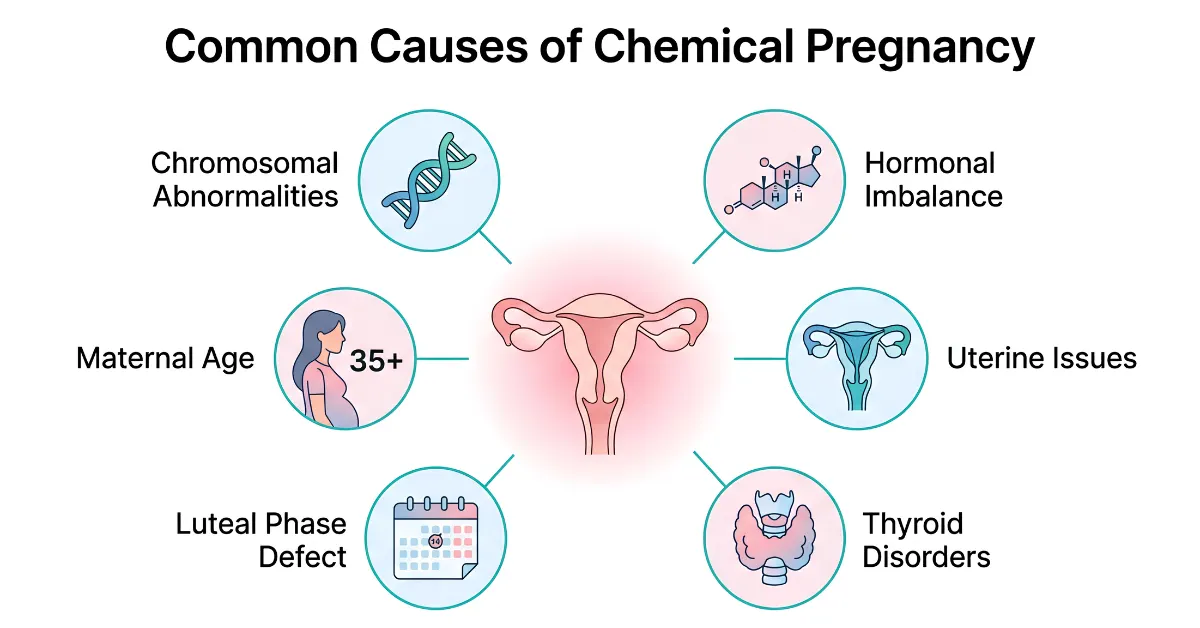
Understanding the common chemical pregnancy causes can help explain why this early pregnancy loss happens. In most cases, it is not caused by anything the woman did or did not do.
The most common reasons for chemical pregnancy include:
Chromosomal abnormalities: This is the most frequent cause. The fertilized egg may have an incorrect number of chromosomes, making it impossible for the pregnancy to develop normally. This is a random event and not related to the parents' health.
Hormonal imbalance: Low progesterone levels or other hormonal disruptions can prevent the uterine lining from supporting early implantation properly.
Uterine issues: Structural problems like fibroids, polyps, or an abnormally shaped uterus can interfere with implantation and early development.
Thyroid disorders: An underactive or overactive thyroid can affect hormone levels and early pregnancy support. If you have thyroid concerns, read this guide on thyroid tests during pregnancy.
Luteal phase defects: A short luteal phase means the body does not produce enough progesterone after ovulation to sustain a very early pregnancy.
Age: The risk of chromosomal errors in eggs increases with age, which is why chemical pregnancies are slightly more common in women over 35.
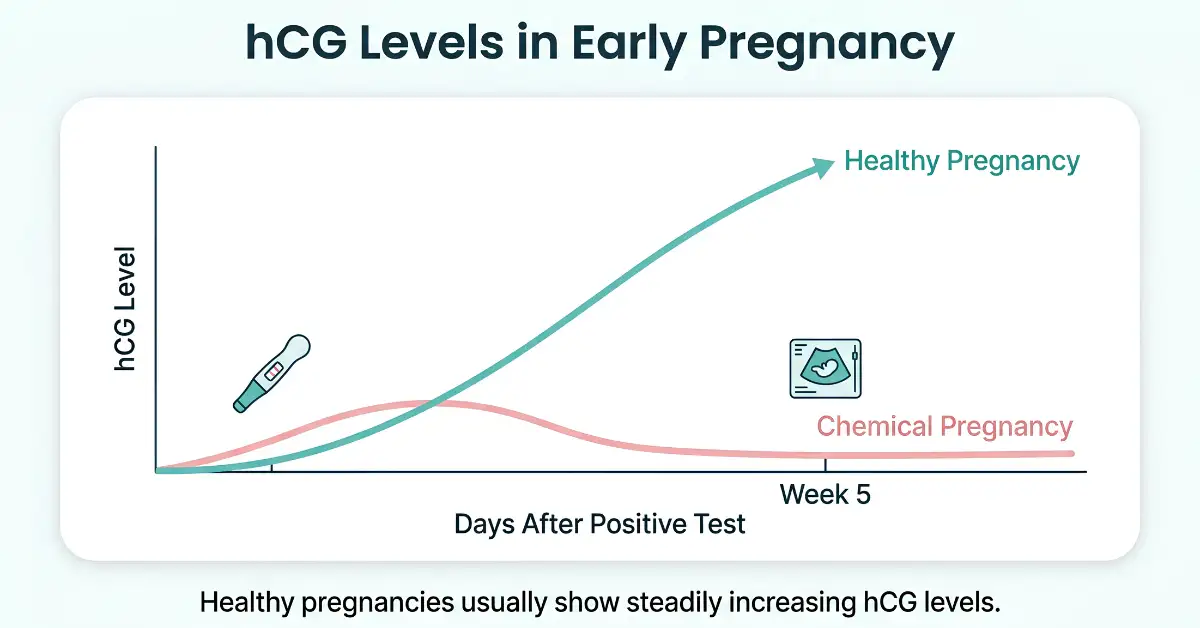
Chemical pregnancy hCG levels rise after implantation but do not increase at the normal rate seen in a healthy pregnancy.
In a healthy pregnancy, hCG levels typically double every 48 to 72 hours in the early weeks. In a chemical pregnancy, hCG may rise slightly, enough to trigger a positive test but then plateau or drop within days.
Doctors often recommend repeated blood tests over 48 hours to monitor hCG levels. Falling levels usually confirm that the pregnancy is no longer developing.
Only your doctor can interpret your hCG levels accurately based on your pregnancy and medical history.
Chemical pregnancies are more common than many people realize and often happen before a woman knows she is pregnant. In most cases, they are caused by random chromosomal abnormalities in the embryo and are not the result of anything you did or did not do. A single chemical pregnancy does not usually affect your fertility or your chances of having a healthy pregnancy in the future. Most women recover quickly and go on to conceive naturally without needing additional medical treatment.
The good news is that your body typically recovers quickly. Ovulation after a chemical pregnancy usually returns within 2 to 4 weeks, once hCG levels drop back to zero and your normal cycle resumes. Many women are able to try again in the very next cycle, though it is always worth checking with your doctor first. Waiting one full cycle is often recommended to allow the uterine lining to restore fully and make cycle tracking easier.
If you are planning another pregnancy, these steps may help:
There is no guaranteed way to prevent a chemical pregnancy caused by chromosomal abnormalities, since those are random events. However, how to avoid chemical pregnancy related to other causes is possible with the right steps.
Although a chemical pregnancy cannot always be prevented, these steps may support a healthy pregnancy:
If you have had recurrent early losses, a full evaluation by an experienced gynecologist in Ranchi can identify underlying causes and guide the right treatment plan.
One chemical pregnancy is not usually a cause for concern. But you should see a gynaecologist if:
Early evaluation prevents delays in identifying and treating causes that are manageable with the right care.
Can a chemical pregnancy be detected on an ultrasound?
No. A chemical pregnancy ends too early to be visible on an ultrasound scan. It is only detected through a positive hCG blood or urine test followed by a rapid fall in levels.
How long does chemical pregnancy bleeding last?
Chemical pregnancy bleeding usually lasts as long as a normal period around 4 to 7 days. It may be slightly heavier or accompanied by mild cramping.
Does a chemical pregnancy mean something is wrong with me?
Not usually. A single chemical pregnancy is most often caused by a random chromosomal error in that specific embryo. It does not mean there is a problem with your fertility or reproductive health.
How soon can I ovulate after a chemical pregnancy?
Most women ovulate 2 to 4 weeks after a chemical pregnancy once hCG levels return to normal. Many can try to conceive again during the next menstrual cycle after medical advice.
Is a chemical pregnancy a sign that I can get pregnant?
Yes. A chemical pregnancy shows that fertilization and implantation occurred successfully. Although the pregnancy ended early, it often indicates that natural conception is possible in future cycles.
A chemical pregnancy is a loss and it is okay to grieve it, even if it happened very early. At the same time, it is important to know that one chemical pregnancy does not predict your future. Most women who experience one go on to have healthy pregnancies.
Stay informed, take care of your body, and speak with your doctor if you have concerns. You are not alone in this.
If you are in Ranchi and need support for early pregnancy loss, fertility concerns, or hormonal health, consult an experienced gynecologist in Ranchi at Vardaan Hospital for diagnosis, treatment, and personalized pregnancy care.
📞 796 929 4525 ✉️ [email protected] 📍 Block Road, Kathi Tand Chowk, Ratu, Ranchi
Vardan Hospitals © 2025. All rights reserved.