
If you or someone in your family has been advised to start dialysis, a common and natural question is: how many types of dialysis are there?
Learning about dialysis options helps people feel more prepared and confident about treatment. Dialysis methods are limited, clearly defined, and chosen carefully by doctors based on what suits each patient best.
This article explains the different types of dialysis in a simple way, how each type works, and when they are usually recommended.
There are two main types of dialysis used for most patients.
The first is hemodialysis, and the second is peritoneal dialysis.
In certain hospital situations, especially for very sick patients, doctors may use a third method called continuous renal replacement therapy (CRRT). However, this is not a regular dialysis option for long-term treatment.
For the majority of patients, dialysis treatment involves either hemodialysis or peritoneal dialysis.
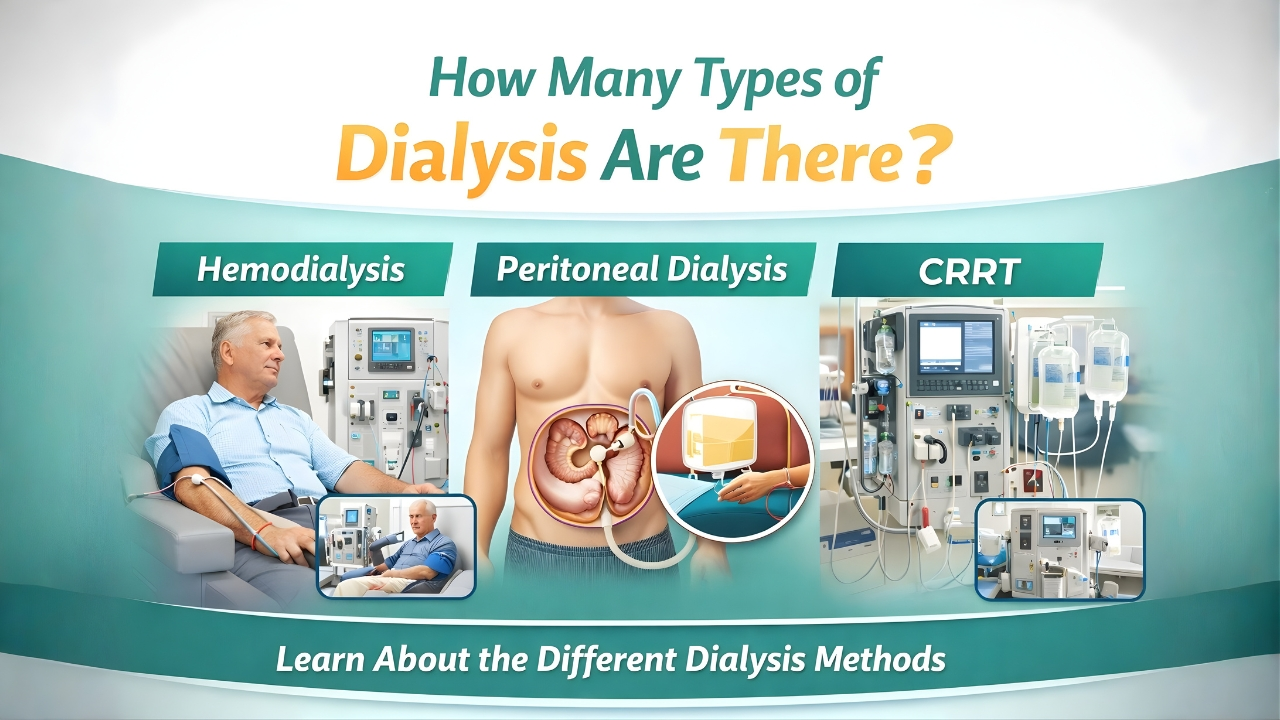
Hemodialysis is the most commonly used type of dialysis worldwide.
In this method, blood is taken from the body through a special access in the arm, passed through a dialysis machine that removes waste and extra fluid, and then returned to the body. This process helps perform the job that the kidneys can no longer do effectively.
Hemodialysis is usually done at a hospital or dialysis center. Most patients undergo treatment two to three times a week, with each session lasting several hours. The treatment is supervised by trained medical staff, which many patients find reassuring.
Hemodialysis is often recommended for patients who prefer regular monitoring or who may not be suitable for home-based dialysis.
At this stage, many patients also ask about comfort during treatment, especially needle use and session duration. To understand this in detail, you can read Is Dialysis Painful?, which explains what patients usually feel during and after dialysis.

Peritoneal dialysis is another main type of dialysis and works differently from hemodialysis.
Instead of using a machine to clean the blood, peritoneal dialysis uses the lining of the abdomen, called the peritoneum, as a natural filter. A cleansing fluid is placed into the abdomen through a soft tube, where it absorbs waste and excess fluid. The fluid is then drained out and replaced.
Peritoneal dialysis does not require needles during each session and is often performed at home. Many patients appreciate the flexibility it offers, as it allows them to continue daily activities with fewer hospital visits.
This type of dialysis may be suitable for patients who are comfortable managing treatment at home after proper medical training.

Yes, but it is used only in specific medical situations.

CRRT is a slow and continuous form of dialysis used mainly for patients in intensive care units. It is usually recommended when a patient’s condition is unstable or when continuous monitoring is required.
CRRT is managed entirely in a hospital setting and is not a long-term dialysis option for most patients. Doctors decide on this method based on immediate medical needs.
You may see different numbers mentioned online, which can cause confusion.
In simple terms:
For patients, the decision usually comes down to choosing between hemodialysis and peritoneal dialysis, based on medical advice.
The most suitable type of dialysis depends on several factors, including overall health, kidney function, daily routine, and medical history. A nephrologist evaluates these details carefully before recommending a treatment plan.
Patients are encouraged to discuss their preferences, lifestyle, and concerns openly with their doctor so the chosen method fits their needs comfortably.
Patients seeking guidance and reliable care can consult the specialists at Vardaan Hospitals’ dialysis center in Ranchi, which provides both hemodialysis and peritoneal dialysis services under experienced nephrology care.
The three types are hemodialysis, peritoneal dialysis, and continuous renal replacement therapy. CRRT is mainly used in hospital intensive care units.
There is no single best method for everyone. The best option depends on the patient’s health condition, lifestyle, and doctor’s recommendation.
Stage 5 kidney disease is also called end-stage kidney disease. At this stage, dialysis or a kidney transplant is usually required to support the body.
Some patients may experience digestive changes, but diarrhea is not a common side effect of dialysis. If it occurs, it should be discussed with a doctor.
Yes. Peritoneal dialysis and certain types of hemodialysis can be done at home with proper training and medical guidance.
There are two main types of dialysis: hemodialysis and peritoneal dialysis. In special hospital situations, a third type called CRRT may be used.
Understanding these options helps patients feel informed and prepared. With the right medical guidance and care, dialysis can be managed safely and effectively.
For consultations or dialysis-related care, patients can contact the team at Vardaan Hospitals, Ranchi, who are available to support patients at every stage of treatment.
Call us:
Email:
Visit us:
Vardan Hospitals © 2025. All rights reserved.