
If your doctor has told you that dialysis may be needed, one of the first questions that comes to mind is simple and honest: Is dialysis painful?
Feeling anxious is completely normal. Starting dialysis can feel overwhelming, especially when you do not know what to expect.
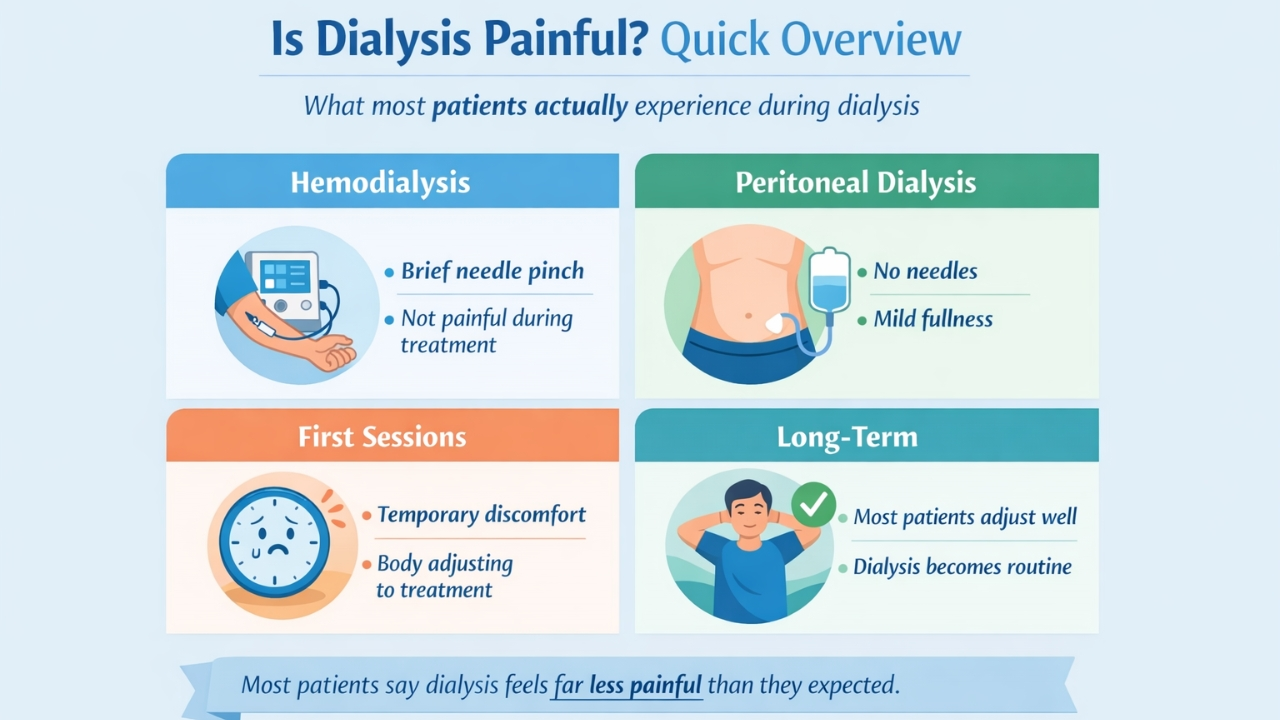
The good news is that dialysis itself is usually not painful for most patients. Some people experience mild discomfort, especially at the beginning, but the treatment is designed to make you feel better, not worse.
This article explains what dialysis feels like, where discomfort can occur, and how pain is managed during treatment.
For most people, dialysis is not painful, but it may involve temporary discomfort depending on the type of dialysis and individual sensitivity.
The experience varies based on:
Most patients say that once they adjust, dialysis becomes a routine part of life.
Dialysis is required when the kidneys can no longer filter waste, excess fluids, and toxins from the blood. The treatment helps maintain safe levels of electrolytes, removes waste, and prevents life-threatening complications.
There are two main types of dialysis, and pain levels can differ between them.
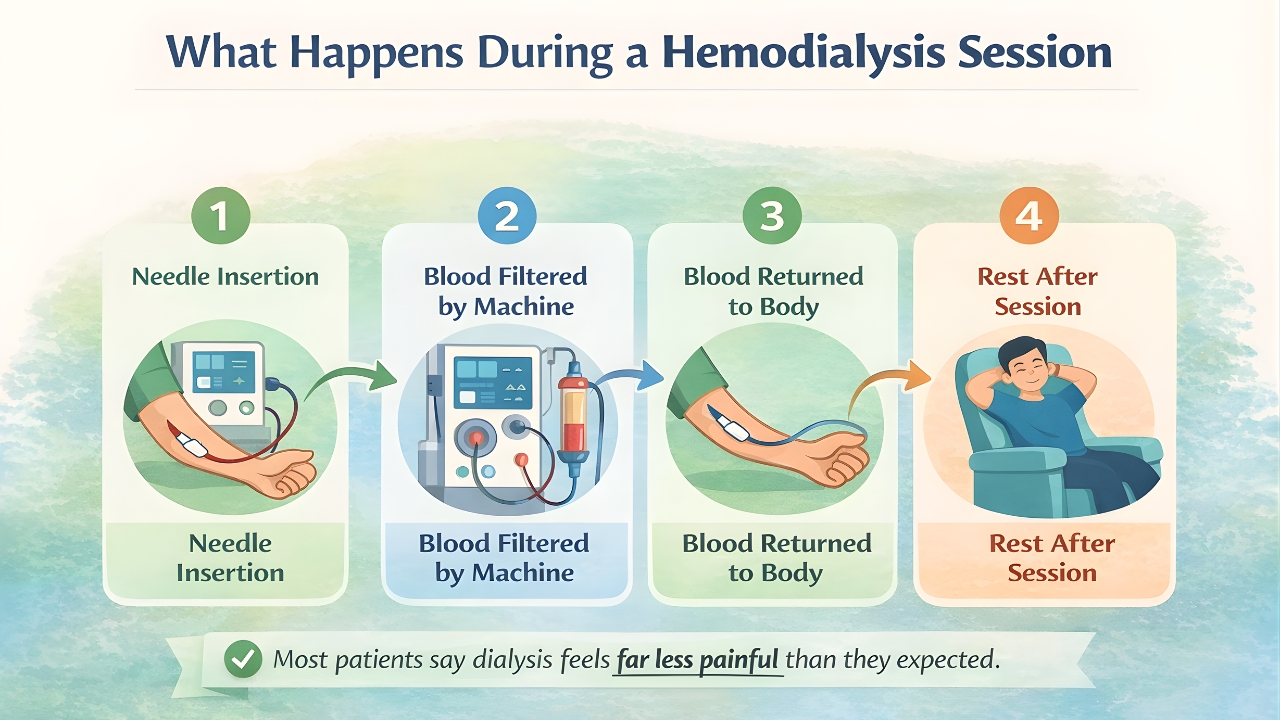
Hemodialysis is the most common form of dialysis and is usually done at a dialysis center or hospital.
The most uncomfortable part for many patients is needle insertion at the access site (fistula or graft).
Many centers use numbing creams or sprays to reduce discomfort.
Once the needles are in place:
Some patients notice a mild vibration at the access site, which is normal.
After a session, some people may experience:
These symptoms usually fade within a few hours and become less common as the body adapts to treatment.
Peritoneal dialysis does not involve needles during each session, which many patients find more comfortable.
You may feel:
This feeling is usually not painful and improves as your body adjusts. Most people can perform peritoneal dialysis at home and continue normal daily activities.
The first few sessions may feel uncomfortable because:
However, this discomfort is usually temporary. Most patients report that dialysis becomes much easier after the first few weeks.
Pain levels vary, but in general, peritoneal dialysis involves less needle-related discomfort, while hemodialysis may cause brief pain only during needle insertion.
Your doctor will recommend the most suitable option based on your medical condition, lifestyle, and personal comfort. If you want a clearer understanding of how each option works, you can also read our detailed guide on How Many Types of Dialysis Are There? to compare treatment methods before making a decision.
If you are looking for a trusted dialysis center in Ranchi, specialized nephrology teams and modern dialysis care are available at Vardaan Hospitals.
If pain continues or worsens, treatment settings can usually be adjusted.
Here are simple steps that help most patients feel more comfortable:
Proper care makes a big difference in comfort.
You should inform your healthcare team if you experience:
Dialysis plans can be adjusted to improve comfort and safety. Most patients say dialysis feels far less painful than they expected.
Proper care, communication, and experience make a big difference.
Dialysis is generally not painful, though mild discomfort can occur, especially in the beginning. Most patients adjust over time and find that dialysis helps them feel healthier and more stable.
Understanding what to expect can reduce fear and help you approach treatment with confidence.
If you or a loved one is considering dialysis and would like guidance from experienced specialists, you can speak with the care team at Vardaan Hospitals’ dialysis center in Ranchi to understand your options and receive personalized support.
You can contact the dialysis care team at Vardaan Hospitals, Ranchi for consultation, guidance, or appointment support.
Call us:
Email:
Visit us:
Our team is available to help you understand the treatment process and choose the right care with confidence.
No. Dialysis is usually not painful each time. Most discomfort happens during the first few sessions and often reduces as the body adjusts.
No. Many patients find dialysis becomes easier over time. As the body adapts, discomfort and side effects often decrease.
Yes. Pain can usually be controlled with numbing creams, treatment adjustments, and by informing the care team about any discomfort.
Often, yes. Many patients find home dialysis more comfortable because it offers flexibility, fewer needles, and a familiar environment.
Life expectancy varies, but many people live 5–10 years or longer on dialysis. Some live 20 years or more, especially with regular treatment and good overall health.
Dialysis begins working from the first session. Waste and excess fluid are removed immediately, while overall improvement is usually seen within a few weeks.
Common side effects include tiredness, muscle cramps, low blood pressure, headache, or nausea. These are usually mild and manageable.
Yes. Many people live active and meaningful lives on dialysis. With proper care, patients can work, travel, and enjoy daily activities.
Vardan Hospitals © 2025. All rights reserved.