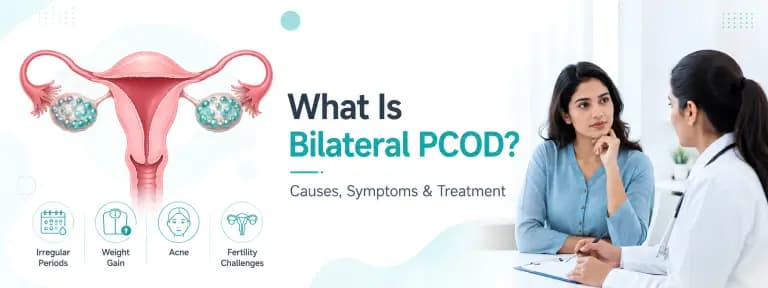
There is no single PCOD problem solution. Most women achieve the best results through a combination of lifestyle changes, healthy eating, regular exercise, and appropriate medical treatment.
Bilateral PCOD is a condition where both ovaries show polycystic changes, meaning multiple small, underdeveloped follicles are seen in both ovaries on an ultrasound scan. It is one of the most common hormonal findings in women of reproductive age in India today.
If your ultrasound report says "bilateral PCOD" or "bilateral polycystic ovaries," you are likely looking for clear answers about what it means, what causes it, and what you can do about it. This guide covers all of that in simple language.
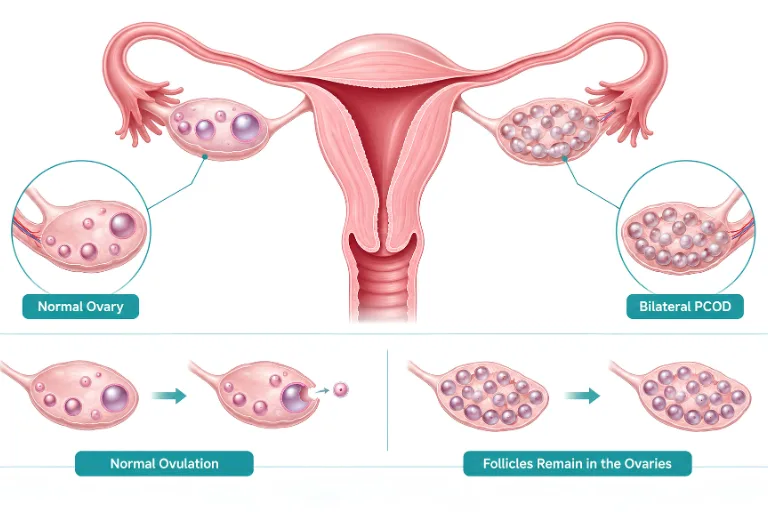
To understand the bilateral PCOD meaning, it helps to know how the ovaries normally work. Each month, small follicles develop in the ovaries, and one releases an egg during ovulation. In women with PCOD, hormonal imbalance prevents the follicles from maturing properly, so they remain as small fluid-filled sacs. When these changes occur in both ovaries, the condition is called bilateral PCOD.
Bilateral PCOD is usually identified on an ultrasound scan. It is also different from PCOS, which is a broader hormonal condition that can cause irregular periods, weight gain, acne, and fertility problems.
It is also important to understand the difference between PCOD and PCOS. Bilateral PCOD refers to structural changes seen on ultrasound, whereas PCOS is a broader hormonal and metabolic condition that can cause irregular periods, acne, weight gain, and fertility problems.
| Feature | Bilateral PCOD | PCOS |
|---|---|---|
| Meaning | Polycystic changes are seen in both ovaries on ultrasound. | A hormonal and metabolic disorder affecting ovulation and hormones. |
| Diagnosis | Based mainly on ultrasound findings. | Diagnosed using symptoms, hormone tests, and Rotterdam criteria. |
| Symptoms | May have mild or no symptoms. | Often causes irregular periods, acne, excess hair growth, and weight gain. |
| Hormonal Changes | Hormone levels may be normal. | Hormonal imbalance is usually present. |
| Fertility | Fertility may remain normal. | Can affect ovulation and fertility. |
| Treatment | Depends on symptoms and ultrasound findings. | Often requires long-term lifestyle and medical management. |
The exact bilateral PCOD causes can vary from person to person and usually involve a combination of hormonal, genetic, and lifestyle factors.
Hormonal imbalance: Hormones that control ovulation become disrupted, preventing the follicles from maturing and releasing an egg. The immature follicles remain in the ovaries and appear as small cysts on ultrasound.
Insulin resistance: Many women with bilateral PCOD have insulin resistance, where the body does not use insulin effectively. Higher insulin levels increase androgen production, which further affects ovulation and menstrual cycles.
Genetics: Bilateral PCOD tends to run in families. Women whose mother or sister has PCOD or PCOS are more likely to develop the condition.
Lifestyle factors: Obesity, a sedentary lifestyle, poor dietary habits, stress, and inadequate sleep can worsen hormonal imbalance and increase the risk of developing bilateral PCOD or making its symptoms more severe.
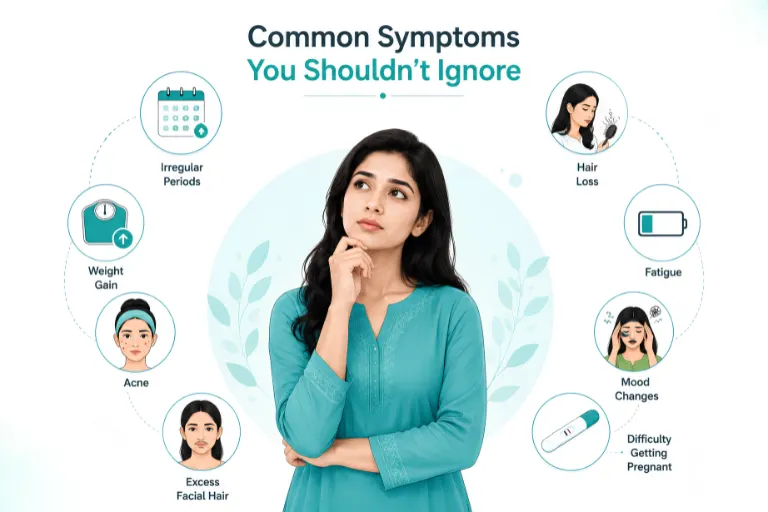
Some women may have no symptoms and are diagnosed during a routine health checkup or fertility evaluation.
If you are experiencing hormonal symptoms like these, our article on hormonal imbalance in women explains the broader picture of how hormones affect women's health.
Bilateral PCOD diagnosis is usually based on symptoms, medical history, ultrasound findings, and, in some cases, blood tests. Your gynaecologist will combine several assessments to get a complete picture.
There is no permanent cure for bilateral PCOD, but it can be managed very effectively. Treatment is personalised depending on your symptoms, age, and goals, including if you are trying to conceive.
Many women search for a PCOD problem solution, but treatment usually involves a combination of healthy lifestyle changes and medical care rather than a single cure.
At Vardaan Hospital, our gynaecology team provides complete evaluation and personalised care for women with bilateral PCOD. You can also explore our gynecologist services in Ranchi, diabetology services for insulin resistance management, dietetics services for personalised nutrition support, and pathology lab services for all hormonal and metabolic testing under one roof.
Most women with bilateral PCOD can conceive naturally or with medical support. Managing the condition properly and restoring regular ovulation through lifestyle changes or medication significantly improves pregnancy chances. Following a healthy PCOD diet, maintaining a healthy weight, and exercising regularly can further support fertility.
If you are planning a pregnancy, consult a gynaecologist early to optimise your hormonal and metabolic health. You can also read our guide on PCOD vs PCOS for a deeper understanding of how the two conditions compare.
See a gynaecologist in Ranchi if you have irregular or absent periods for more than three months, are trying to conceive without success, have significant weight gain you cannot explain, are experiencing severe acne or excess facial hair, or have been told by an ultrasound report that you have bilateral PCOD or polycystic ovaries.
Early evaluation and treatment prevents long-term complications including diabetes, heart disease, and endometrial problems.
What does bilateral PCOD mean in an ultrasound report?
It means that both ovaries show polycystic changes like multiple small, underdeveloped follicles, as seen on the ultrasound scan. It does not automatically mean you have PCOS or will have fertility problems.
Is bilateral PCOD more serious than regular PCOD?
Bilateral PCOD means both ovaries are affected rather than just one. It does not necessarily mean the condition is more severe. The seriousness depends on associated symptoms, hormone levels, and how the condition is managed.
Can bilateral PCOD go away on its own?
It is a chronic condition but many women see significant improvement with lifestyle changes. Regular exercise, a balanced diet, and maintaining a healthy weight can reduce the polycystic changes visible on ultrasound over time.
Does bilateral PCOD affect periods?
Yes. Because bilateral PCOD affects ovulation in both ovaries, it often causes irregular, delayed, or missed periods. Some women have very infrequent periods or go months without one.
What is the bilateral PCOD pattern on ultrasound?
It refers to the characteristic appearance on ultrasound where both ovaries appear enlarged and contain 12 or more small follicles arranged around the outer edge of the ovary, sometimes described as a "string of pearls" appearance.
At what age can bilateral PCOD develop?
It can develop from puberty onwards, sometimes as early as 11 to 12 years during the first menstrual cycles. It is most commonly diagnosed in women between 15 and 35 years of age.
Bilateral PCOD is a common hormonal condition that affects both ovaries. It is identified through an ultrasound scan and is linked to hormonal imbalance, insulin resistance, and lifestyle factors. Early PCOD treatment can help improve hormonal balance and protect long-term reproductive health.
If your ultrasound report shows bilateral PCOD or you are experiencing symptoms like irregular periods, weight gain, or excess hair growth, do not ignore it. Early evaluation and the right treatment plan can help you manage the condition and protect your long-term health.
At Vardaan Hospital, our experienced gynaecologists provide complete assessment and personalised care for women with PCOD, hormonal imbalance, and related conditions.
Call us: 📞 796 929 4525
Email: ✉️ [email protected]
Visit us: 📍 Block Road, Kathi Tand Chowk, Ratu, Ranchi
Book your consultation today and take the first step toward better hormonal health.
Disclaimer: This article is for informational purposes only and does not replace professional medical advice, diagnosis, or treatment. Please consult a qualified gynaecologist for personalised guidance.
Vardan Hospitals © 2025. All rights reserved.