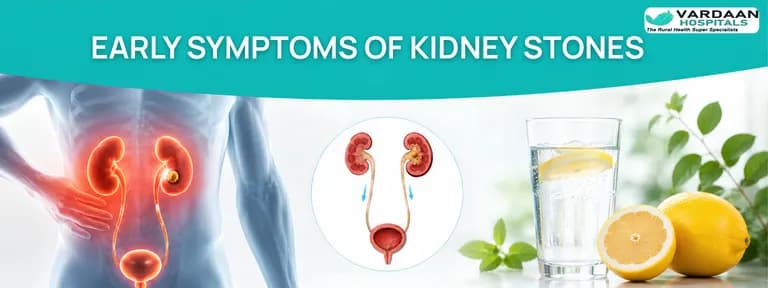
Kidney stones are one of the most painful conditions a person can experience. But here is something important, kidney stones do not appear suddenly without warning. In most cases, your body gives you signs well before the pain becomes severe. Knowing the kidney stone early symptoms can help you get the right treatment faster and avoid serious complications.
This guide covers everything you need to know, from the earliest warning signs to what causes kidney stones, how they are diagnosed, and what you should eat to prevent them from coming back.
Although kidney stones may not cause symptoms immediately, recognising the early warning signs can help prevent complications and ensure timely treatment. Kidney stones are hard deposits of minerals and salts that form when urine becomes highly concentrated, allowing crystals to stick together. While small stones may pass without symptoms, larger ones can block the urinary tract and cause severe pain. The main types include calcium oxalate, uric acid, struvite, and cystine stones.
Learn more about kidney stones from the National Institute of Diabetes and Digestive and Kidney Diseases (NIDDK).
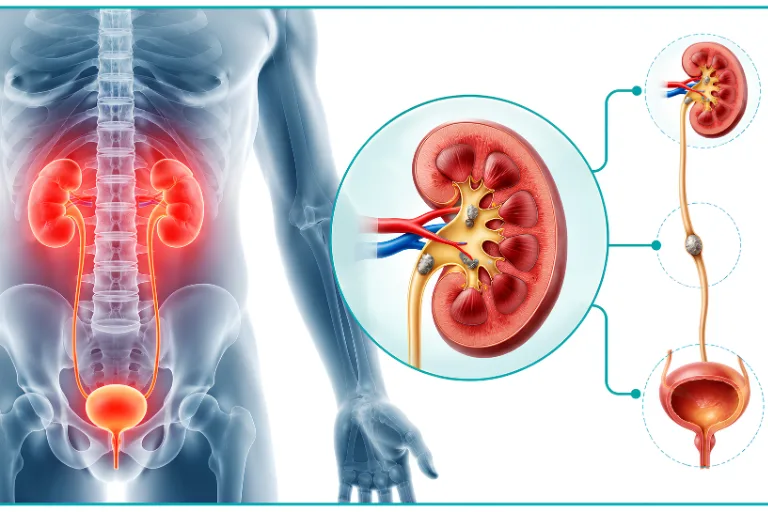
Recognising early symptoms of kidney stones before they become a full medical emergency can save you a great deal of pain and treatment time. Here are the signs to look for.
The first and most telling of all kidney stone early symptoms is a sharp, cramping pain that starts on one side of the back or just below the ribs. The pain may come in waves and move toward the lower abdomen and groin as the stone travels. Sudden severe pain needs prompt medical evaluation and immediate attention.
A burning sensation or sharp pain while passing urine is a classic kidney stone early symptom. This usually happens when the stone reaches the junction between the ureter and bladder, causing irritation. Many people mistake these symptoms for a urinary tract infection, making a proper medical diagnosis important for receiving the right treatment without unnecessary delays.
Blood in the urine, which may appear red, pink, or brown, is one of the clearest early warning signs of kidney stones. It occurs because the stone scrapes the walls of the urinary tract while moving. Even when blood is not visible, a urine test can detect it. Never ignore this sign and seek medical evaluation promptly.
Feeling the need to urinate more often than usual or experiencing a constant urgent need is another common kidney stone early symptom. This happens when the stone irritates the bladder or lower urinary tract. Some people pass only small amounts of urine despite the strong urge, making medical assessment important for proper diagnosis and treatment.
Healthy urine is usually clear to pale yellow with very little smell. Cloudy or foul-smelling urine can indicate that a kidney stone has caused irritation or a urinary tract infection. Because a kidney stone with an infection can become serious quickly, this kidney stone symptom should never be ignored and requires prompt medical evaluation.
The kidneys share nerve pathways with the digestive system, so kidney stones can trigger nausea and vomiting. If back pain occurs with these symptoms without another obvious cause, kidney stones may be responsible. For healthcare professionals and medical coding purposes, nausea and vomiting ICD 10 codes are used when documenting these symptoms before diagnosis.
Fever and chills with kidney stone symptoms are warning signs of a possible kidney infection. This can occur when a stone blocks the urinary tract and allows infection to develop. A kidney infection combined with a blocked stone is a medical emergency. Seek immediate hospital care if fever, chills, and severe pain occur together.
Kidney stones are more common than many people realise, and several factors increase your risk. You are more likely to develop kidney stones if you stay dehydrated, eat a diet high in salt, protein, and oxalate-rich foods, have a family history, diabetes, obesity, gout, recurrent urinary tract infections, or have had kidney stones before. Men are affected more often, though cases among women are increasing.
If your doctor suspects kidney stones based on your symptoms, the following tests are usually ordered:
Urine test — to check for blood, infection, and mineral levels in the urine.
Blood test — to assess kidney function and check calcium and uric acid levels.
CT scan — the most accurate imaging test for kidney stones. It can detect even very small stones and show exactly where they are located. This is the preferred test in most hospital settings.
Ultrasound — commonly used as a first step because it does not involve radiation. It is effective for detecting larger stones.

Diet plays an important role in preventing kidney stones and reducing the risk of recurrence. A proper diet for stone patients focuses on hydration and balanced nutrition.
If you want to understand how kidney disease and kidney stones are related and when to see a specialist, you can read our article on early signs of kidney disease and our complete guide on what doctor treats kidney disease.
Not every kidney stone requires surgery. Small stones often pass naturally with plenty of fluids, pain relief, and prescribed medication. However, you should see a urologist in Ranchi or your nearest specialist if your pain is severe, you develop fever or signs of infection, you are unable to urinate, your urine output decreases, or your symptoms return.
A urologist or a stone and urology clinic in Ranchi can assess the size and position of the stone, recommend the most suitable treatment, and provide guidance to help prevent future kidney stones.
Treatment for kidney stones depends on the size, type, and location of the stone. Small stones under 5mm often pass naturally with increased fluid intake, pain relief, and medication. Stones between 5mm and 10mm may require medical supervision. Larger stones or those causing obstruction may be treated with shock wave lithotripsy (ESWL), ureteroscopy, or, in rare cases, surgery to remove the stone safely.
Note: Symptoms such as swelling around the testes may indicate conditions like hydrocele rather than kidney stones. If you experience swelling along with urinary symptoms, consult a hydrocele doctor in Ranchi or a qualified urologist for an accurate diagnosis.
Can kidney stones go away on their own?
Small kidney stones under 5mm often pass naturally with plenty of water and prescribed medication. Larger stones usually require medical treatment or intervention.
How long does it take to pass a kidney stone?
Small stones can pass within a few days to a few weeks. Stones between 5 and 10mm can take up to 4 to 6 weeks. Stones above 10mm rarely pass on their own.
Can kidney stones affect both kidneys at the same time?
Yes, though it is less common. Having stones in both kidneys simultaneously usually indicates an underlying metabolic issue that needs specialist evaluation.
What is the difference between a urologist and a nephrologist for kidney stones?
A urologist treats kidney stones by removing or breaking them and managing blockages. A nephrologist focuses on kidney function and related conditions. For kidney stones, a urologist is usually the first specialist to consult.
What is the nausea and vomiting ICD 10 code?
Nausea and vomiting ICD 10 is commonly classified under category R11, with the exact code depending on the patient's diagnosis and symptoms. Healthcare providers use these codes for medical documentation and billing. If nausea and vomiting occur with severe back pain, they may indicate kidney stones and require prompt medical evaluation.
If you are experiencing kidney stone early symptoms such as severe back pain, blood in the urine, burning during urination, nausea, or fever, don't ignore them. Early diagnosis and treatment can help prevent complications.
At Vardaan Hospital, our experienced urology team provides complete kidney stone evaluation, advanced diagnostic imaging, and the full range of treatment options from non-surgical management to minimally invasive procedures.
Call us: 📞 796 929 4525
Email: ✉️ [email protected]
Visit us: 📍 Block Road, Kathi Tand Chowk, Ratu, Ranchi
Book your consultation today and take the first step toward pain-free kidney health.
Disclaimer: This article is for general informational purposes only and does not replace professional medical advice, diagnosis, or treatment. Please consult a qualified urologist or kidney specialist for personalised guidance on your condition.
Vardan Hospitals © 2025. All rights reserved.