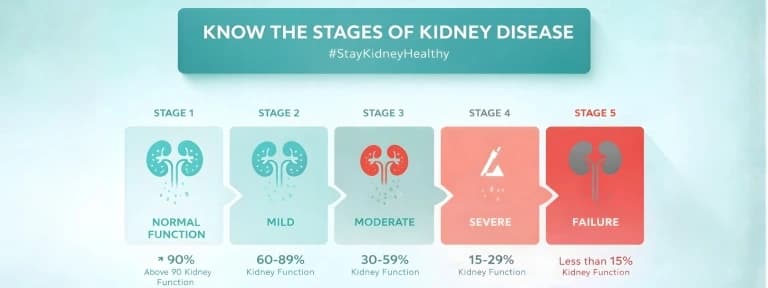
Kidney disease develops gradually and often goes unnoticed in its early stages. Many patients only realize the severity when symptoms become serious. Understanding the different stages of kidney disease is important for early diagnosis, timely treatment, and preventing complications like kidney failure. Knowing when dialysis may be required can help patients and families prepare for proper medical care and improve outcomes.
Kidney disease is divided into five stages based on how well the kidneys are functioning. Doctors measure this using a test called GFR (Glomerular Filtration Rate), which shows how effectively the kidneys are filtering waste from the blood.
In Stage 1, kidney function is still normal, but there may be early signs of damage such as protein in urine or structural abnormalities.
At this stage:
Early diagnosis at this stage allows patients to prevent further damage with proper care and lifestyle changes.
In Stage 2, kidney function starts to decline slightly, but many people still do not notice symptoms.
Common signs may include:
Managing underlying conditions like diabetes and hypertension is crucial at this stage.
Stage 3 is where kidney disease becomes more noticeable and may start affecting daily life.
Symptoms may include:
Stage 3 is often divided into two parts (3A and 3B), depending on severity. Proper medical care is essential to slow progression.
In Stage 4, kidney function is significantly reduced, and symptoms become more serious.
Common symptoms include:
At this stage, doctors begin preparing patients for possible dialysis or kidney transplant.
Stage 5 is also known as kidney failure or end-stage kidney disease. The kidneys are no longer able to function properly.
Symptoms may include:
At this stage, dialysis or kidney transplant becomes necessary for survival.
Dialysis is usually required in Stage 5 kidney disease, but in some cases, it may be needed earlier depending on symptoms and overall health.
Doctors recommend dialysis when:
Dialysis helps remove waste, balance fluids, and maintain essential body functions.
There are two main types of dialysis used to treat kidney failure.
Hemodialysis involves using a machine to filter blood outside the body. It is usually done in a hospital or dialysis center.
Peritoneal dialysis uses the lining of the abdomen to filter blood inside the body and can sometimes be done at home under medical guidance.
Kidney disease cannot always be reversed, but its progression can be slowed with proper treatment and care.
Important steps include:
Early treatment plays a key role in preventing complications.
Certain individuals have a higher risk and should undergo regular check-ups.
High-risk groups include:
Early screening helps detect kidney disease before it becomes severe.
Understanding the stages of kidney disease helps patients take timely action and avoid serious complications. Early detection and proper treatment can slow the progression and improve quality of life. In advanced stages, dialysis becomes an essential treatment to support body function. Regular check-ups and medical guidance are crucial for maintaining kidney health.
If you or your family member is dealing with kidney disease, Vardaan Hospital offers advanced dialysis services, expert nephrology care, and complete support for kidney patients in Ranchi.
Call us:
Email:
Visit us:
Book your consultation today for early diagnosis and effective kidney care.
Vardan Hospitals © 2025. All rights reserved.